
 Image 1 of 1
Learn to stop fighting anxiety—and start living your life with uncertainty, intrusive thoughts, and discomfort present.
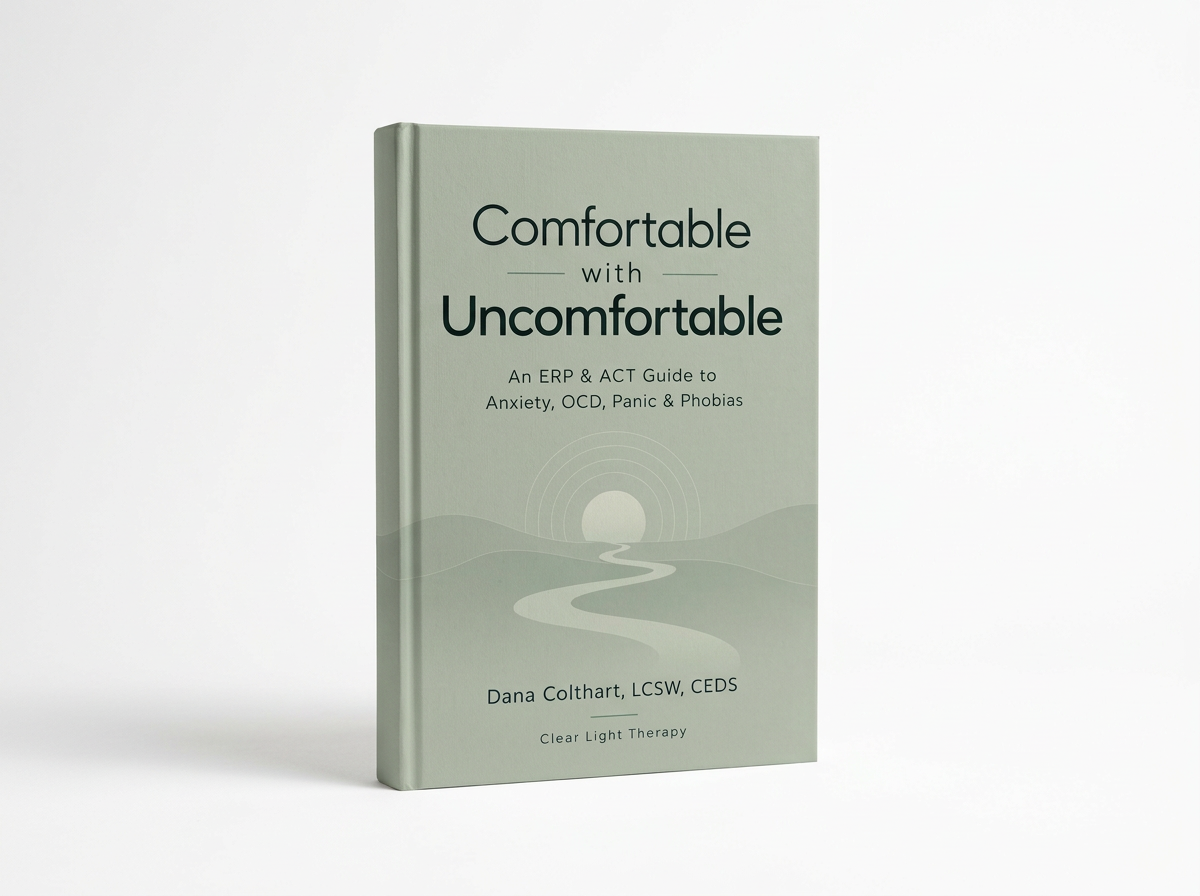
Comfortable with Uncomfortable is a practical, evidence-informed guide to understanding and responding differently to anxiety, OCD, panic, and phobias.
Rather than teaching you how to eliminate every uncomfortable thought or feeling, this guide focuses on a different goal: learning that you can experience discomfort without letting it control your life.
Built around the principles of Cognitive Behavioral Therapy (CBT), Exposure and Response Prevention (ERP), and Acceptance and Commitment Therapy (ACT), this book explains why anxiety and OCD become so persistent—and, more importantly, gives you practical tools for breaking the cycles that keep them going.
You’ll learn how to recognize the OCD cycle, identify both visible and hidden mental compulsions, understand why reassurance and rumination can keep anxiety alive, and approach intrusive thoughts without treating them as problems that need to be solved.
You’ll also learn how to:
Build a fear hierarchy and use it to plan effective ERP exposures
Write exposure scripts and practice response prevention
Work with panic and feared physical sensations through intentional exposure
Approach specific phobias using the same principles
Recognize rumination and learn to disengage from the need to “figure it out”
Practice cognitive defusion and create distance from difficult thoughts
Develop greater tolerance for uncertainty and not knowing
Replace avoidance and resistance with curiosity and flexibility
Respond to yourself with self-compassion rather than criticism
Identify your values and begin building a life that is bigger than anxiety
There are countless books, audiobooks, podcasts, and resources that explain anxiety and OCD. Comfortable with Uncomfortable takes a more hands-on approach.
Instead of simply describing what anxiety or OCD is, the guide is designed to help you put the principles into practice. It walks you through the process of creating exposures, responding differently when anxiety shows up, and gradually changing your relationship with uncertainty and discomfort.
The goal isn't to give you another list of ways to feel calm.
The goal is to help you become less dependent on feeling calm before you live your life.
With dedicated worksheets and practice pages, exposure guidance, concrete exercises, and a concise section of skills you can return to when you need them, this guide is designed to be something you can work through—not just read.
Whether you're struggling with intrusive thoughts, compulsive behaviors, rumination, panic, avoidance, or fear of uncertainty, Comfortable with Uncomfortable offers a framework for learning to respond differently.
Because recovery isn't about making anxiety disappear.
It's about learning that anxiety can be present—and you can still move forward.
Learn to stop fighting anxiety—and start living your life with uncertainty, intrusive thoughts, and discomfort present.
Comfortable with Uncomfortable is a practical, evidence-informed guide to understanding and responding differently to anxiety, OCD, panic, and phobias.
Rather than teaching you how to eliminate every uncomfortable thought or feeling, this guide focuses on a different goal: learning that you can experience discomfort without letting it control your life.
Built around the principles of Cognitive Behavioral Therapy (CBT), Exposure and Response Prevention (ERP), and Acceptance and Commitment Therapy (ACT), this book explains why anxiety and OCD become so persistent—and, more importantly, gives you practical tools for breaking the cycles that keep them going.
You’ll learn how to recognize the OCD cycle, identify both visible and hidden mental compulsions, understand why reassurance and rumination can keep anxiety alive, and approach intrusive thoughts without treating them as problems that need to be solved.
You’ll also learn how to:
Build a fear hierarchy and use it to plan effective ERP exposures
Write exposure scripts and practice response prevention
Work with panic and feared physical sensations through intentional exposure
Approach specific phobias using the same principles
Recognize rumination and learn to disengage from the need to “figure it out”
Practice cognitive defusion and create distance from difficult thoughts
Develop greater tolerance for uncertainty and not knowing
Replace avoidance and resistance with curiosity and flexibility
Respond to yourself with self-compassion rather than criticism
Identify your values and begin building a life that is bigger than anxiety
There are countless books, audiobooks, podcasts, and resources that explain anxiety and OCD. Comfortable with Uncomfortable takes a more hands-on approach.
Instead of simply describing what anxiety or OCD is, the guide is designed to help you put the principles into practice. It walks you through the process of creating exposures, responding differently when anxiety shows up, and gradually changing your relationship with uncertainty and discomfort.
The goal isn't to give you another list of ways to feel calm.
The goal is to help you become less dependent on feeling calm before you live your life.
With dedicated worksheets and practice pages, exposure guidance, concrete exercises, and a concise section of skills you can return to when you need them, this guide is designed to be something you can work through—not just read.
Whether you're struggling with intrusive thoughts, compulsive behaviors, rumination, panic, avoidance, or fear of uncertainty, Comfortable with Uncomfortable offers a framework for learning to respond differently.
Because recovery isn't about making anxiety disappear.
It's about learning that anxiety can be present—and you can still move forward.